Taking the Wheel: How CJD Patients and Families Can Secure Their Voice Before It Is Lost
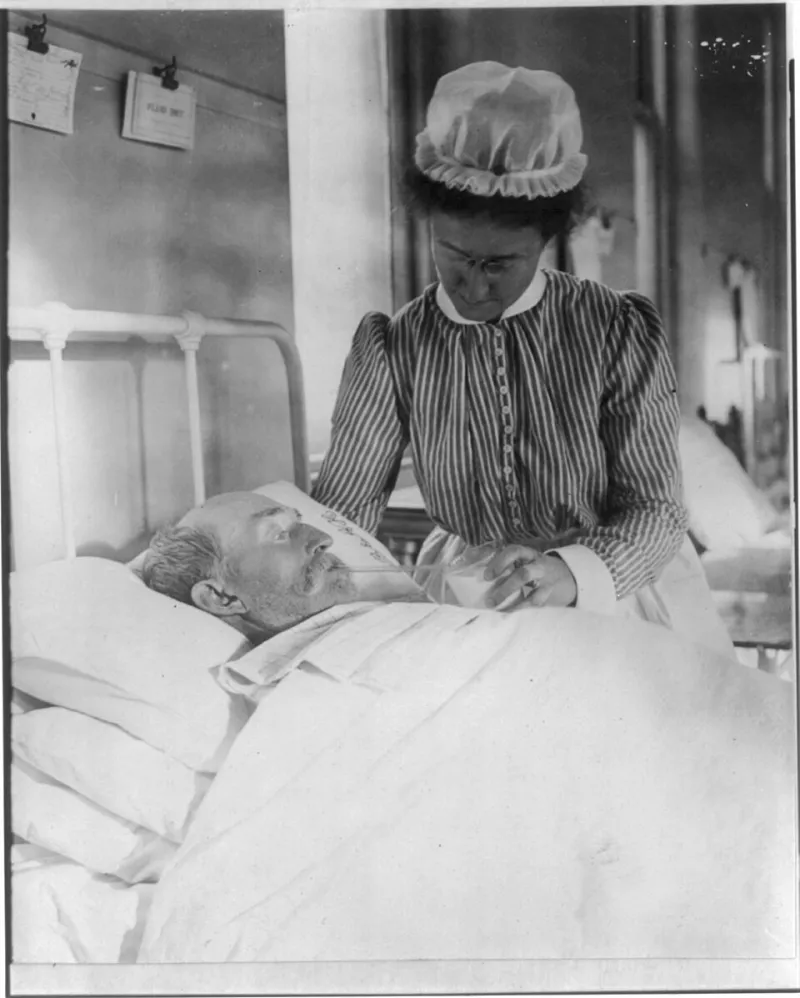
Photo: Miscellaneous Items in High Demand, PPOC, Library of Congress, Public domain, via Wikimedia Commons
There is a particular kind of courage required to sit down—days or weeks after receiving a diagnosis of Creutzfeldt-Jakob disease—and begin talking about what you want the end of your life to look like. The instinct, entirely understandable, is to focus outward: on doctors, on treatments, on the logistics of caregiving. The conversation about values, about what matters most, about who should speak for you when you can no longer speak for yourself, can feel like a surrender.
It is not. In fact, for CJD patients and their families, beginning these conversations early is one of the most powerful forms of agency available. Because CJD can progress to severe cognitive impairment within weeks to months, the window for a patient to participate meaningfully in their own care planning is narrow and precious. Those who use that window deliberately—who document their wishes, designate their advocates, and engage in honest dialogue with the people they love—consistently report that it brings a measure of peace to an otherwise chaotic experience.
This article is a guide to doing exactly that.
Why CJD Makes Advance Planning Uniquely Urgent
Advance care planning is recommended for every adult, but for most people it remains a someday task—something to address before a scheduled surgery or upon reaching a certain age. CJD eliminates that luxury. The disease's rapid progression means that patients who are fully capable of articulating their preferences today may lose that capacity within weeks.
The medical decisions that arise in CJD care are also unusually complex. Families and clinical teams may face choices about artificial nutrition and hydration, mechanical ventilation, hospitalization versus home-based care, participation in research protocols, and the timing of transition to comfort-focused hospice care. Without documented guidance from the patient, these decisions fall entirely to family members—often under conditions of acute grief and exhaustion—or, in the absence of a designated healthcare proxy, to default legal hierarchies that may not reflect the patient's actual wishes.
The goal of advance planning is not to predict every possible scenario. It is to give the people who love you—and the clinicians who care for you—a clear understanding of your values, so that they can make decisions consistent with who you are.
The Core Legal Documents Every CJD Patient Should Have
In New Jersey, several legal instruments exist to formalize a patient's healthcare and financial wishes. Each serves a distinct function.
A Healthcare Proxy (Durable Power of Attorney for Healthcare) designates a specific individual—referred to in New Jersey as a healthcare representative—to make medical decisions on the patient's behalf if they become unable to do so. This person does not need to be a family member; they need to be someone who understands the patient's values and is capable of advocating for them under pressure. Choosing this person carefully, and having a direct conversation with them about your wishes, is at least as important as signing the form.
An Advance Directive (sometimes called a living will) allows patients to document specific instructions about the types of medical interventions they do or do not want under defined circumstances. New Jersey's advance directive law permits considerable specificity. Patients can indicate preferences regarding resuscitation, mechanical ventilation, artificial nutrition, hospitalization, and pain management. The more detailed and clearly expressed these instructions are, the more useful they will be.
A POLST Form (Practitioner Orders for Life-Sustaining Treatment, called a MOLST in New Jersey—Medical Orders for Life-Sustaining Treatment) is a medical order, not merely a legal document. Signed by both the patient (or their representative) and a licensed clinician, it travels with the patient across care settings and provides immediate guidance to emergency responders and clinical teams. For CJD patients, completing a MOLST early in the disease course is strongly advisable.
A Durable Power of Attorney for Finances designates someone to manage financial affairs if the patient becomes incapacitated. This is separate from the healthcare proxy and should be established before cognitive decline affects the patient's legal capacity to execute documents.
All of these documents can be prepared with the assistance of an elder law attorney. Many New Jersey legal aid organizations offer free or low-cost services to individuals with serious diagnoses who cannot afford private counsel.
Having the Conversations That Matter Most
Legal documents are necessary but not sufficient. Research in palliative care consistently shows that the most effective advance care planning involves genuine conversation—between patients and their designated representatives, and between families and their clinical teams—not merely the completion of forms.
These conversations are difficult precisely because they are meaningful. They require patients to reflect on questions that most people spend their lives avoiding: What does a good death look like to me? What am I most afraid of? What would make my life feel like it had been well lived, even now? What do I want the people I love to know, and to remember?
Some families find it helpful to use a structured tool to guide these conversations. The Five Wishes document, available through Aging with Dignity, is widely used across the United States and addresses not only medical preferences but also personal, emotional, and spiritual wishes. It is legally valid in New Jersey and written in accessible language that does not require legal expertise to complete.
Voicing My Choices, developed specifically for young adults facing serious illness, is another resource that may resonate with CJD patients who are younger than the typical demographic for end-of-life planning tools.
For families who are uncertain how to begin, a palliative care social worker or chaplain can facilitate these conversations in a structured, supportive setting. Major New Jersey medical centers, including those affiliated with Rutgers Health and RWJBarnabas Health, have palliative care teams trained in exactly this kind of facilitation.
Ethical Frameworks That Can Guide Decision-Making
When families are confronted with difficult decisions in the absence of complete guidance from the patient, ethical frameworks can provide a principled foundation.
Substituted judgment asks decision-makers to consider what the patient would have chosen, based on their known values, beliefs, and prior statements—rather than what the decision-maker personally believes is best. This standard is preferred in bioethics when there is sufficient knowledge of the patient's values.
Best interests is applied when the patient's wishes are genuinely unknown. It asks what a reasonable person in the patient's circumstances would likely want, with attention to minimizing suffering and preserving dignity.
Clinical ethics consultations are available at most major hospitals and can be requested by families or clinical teams when disagreements arise or decisions feel impossibly difficult. These consultations are not adjudicative—they do not override family or clinical authority—but they provide a structured process for working through complex situations with the support of trained ethicists.
Legacy Planning: Leaving Something Behind
Advance planning is not only about medical decisions. Many CJD patients find deep meaning in the process of creating a legacy—documenting their life story, recording messages for loved ones, or organizing meaningful objects and mementos for the people who will carry their memory forward.
Ethical wills (sometimes called legacy letters) are non-legal documents in which individuals share their values, life lessons, hopes for their loved ones, and reflections on what has mattered most. Unlike legal wills, they require no attorney and no formal process—only the willingness to write, record, or speak.
Organizations such as StoryCorps offer recording resources that allow families to preserve conversations and memories in lasting audio form. Some hospice programs offer legacy projects as part of their care.
For families with children, recording messages—video or audio—addressed to children at future milestones (graduations, weddings, the birth of grandchildren) can be among the most enduring gifts a patient leaves behind.
The Role of the Newark CJD Center in Supporting This Process
At the Newark CJD Center, we believe that supporting patients means supporting the full arc of their experience—not only the clinical dimensions but the human ones. Our care coordination team can connect patients and families with palliative care specialists, legal aid resources, social workers experienced in rare neurological disease, and peer support networks of families who have walked this path before.
We also recognize that no resource, however carefully written, substitutes for human presence and support. If you are a CJD patient or family member reading this article and you do not know where to begin, please reach out. The conversation can start here.