What Newark's Neurology Ecosystem Means for CJD Patients Who Live Miles Away
For most people, a rare neurological diagnosis triggers an immediate and disorienting question: where do I go? For the estimated one in one million individuals diagnosed annually with Creutzfeldt-Jakob disease in the United States, that question carries extraordinary weight. CJD progresses rapidly, diagnostic windows are narrow, and the difference between accessing specialized care quickly versus waiting weeks for a referral can reshape the entire clinical trajectory.
Newark occupies a distinctive position in this landscape — not by accident, but because of decades of institutional investment in neurological research, academic medicine, and coordinated specialty care. Understanding what that concentration of expertise actually means for patients, and how to leverage it regardless of where you live, is essential knowledge for any family confronting this disease.
The Geography of Rare Disease Care
Rare neurological diseases expose the structural inequalities of the American healthcare system with particular clarity. A patient in rural Sussex County, New Jersey, or across the border in southeastern Pennsylvania, may have access to a capable primary care physician and even a general neurologist — but almost certainly lacks proximity to a clinician who has personally managed a CJD case. That experiential gap matters enormously.
CJD mimics a range of other neurological conditions, from autoimmune encephalitis to atypical dementia presentations. Clinicians who encounter the disease infrequently are more likely to pursue lengthy differential diagnoses, order incomplete testing panels, or delay referral to subspecialty care. The result is a pattern well-documented in the literature: patients spending weeks or months in diagnostic limbo while the disease advances.
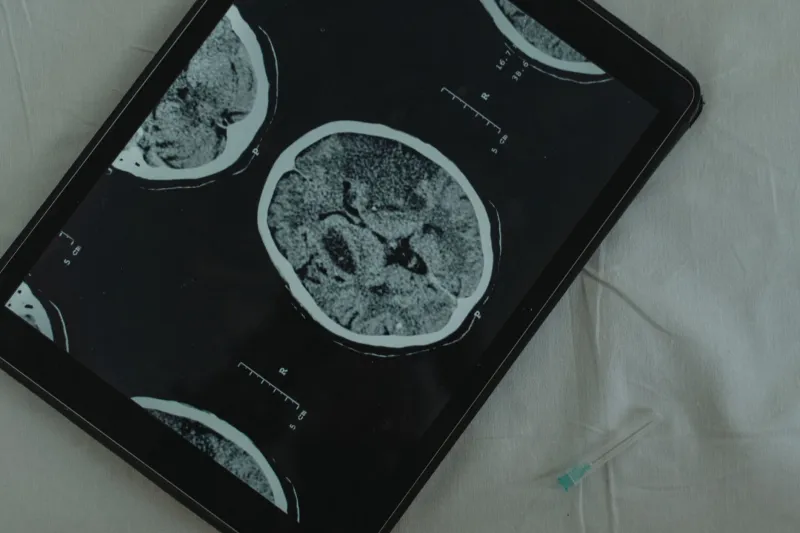
Newark's academic medical environment disrupts that pattern. Institutions in the Newark area maintain active neurology departments with subspecialty training in prion diseases, access to advanced neuroimaging including diffusion-weighted MRI protocols specifically calibrated for CJD detection, and clinical relationships with national prion disease surveillance networks. For a patient presenting with rapidly progressive cognitive decline, that infrastructure compresses the diagnostic timeline in ways that have genuine clinical consequences.
What Specialized Proximity Actually Provides
The advantage of geographic proximity to specialized CJD care operates across several distinct dimensions.
Diagnostic speed. Centers with established CJD protocols can move from initial presentation to confirmatory cerebrospinal fluid testing — including real-time quaking-induced conversion (RT-QuIC) assays — far more efficiently than institutions encountering the disease for the first time. When a clinician has ordered RT-QuIC testing dozens of times, the administrative and logistical friction is minimal. When they have ordered it once or twice, delays accumulate.
Coordinated subspecialty access. CJD management is not the province of neurology alone. Patients benefit from coordinated input across palliative care, neuropsychology, social work, and in some cases genetic counseling — particularly in familial CJD cases where genetic testing carries implications for biological relatives. Newark's institutional infrastructure supports that kind of multidisciplinary coordination in ways that a standalone neurology practice simply cannot replicate.
Research participation. Patients receiving care at or near active research centers have access to clinical trial enrollment, investigational protocols, and longitudinal data collection that may not be available elsewhere. Even in the absence of disease-modifying therapies, participation in research contributes to the collective scientific record and may provide access to supportive interventions still under evaluation.
Caregiver and family support. Specialized centers develop institutional knowledge not only about the disease itself but about the experience of families navigating it. Social workers, care coordinators, and patient navigators at experienced centers have guided dozens of families through the same decisions — around hospice transition, legal planning, and emotional support — that families elsewhere encounter without guidance.
Bridging the Distance: Telemedicine and Regional Coordination
Not every patient can relocate to Newark or make frequent in-person visits to a specialized center. The good news is that the telehealth infrastructure built during and after the COVID-19 pandemic has meaningfully expanded the reach of specialized neurological consultation.
For patients in surrounding regions — central and southern New Jersey, eastern Pennsylvania, parts of New York State — a hybrid care model has become increasingly viable. Initial evaluation and confirmatory testing may require one or two in-person visits to a Newark-area facility. Ongoing care coordination, family consultations, and specialist input on symptom management can often be conducted via secure video platforms without requiring travel that is difficult for patients with advancing neurological symptoms.
This model requires intentional coordination between the patient's local care team and the specialized center. Families should not assume that communication will occur automatically. Requesting a formal care coordination agreement — in which the Newark specialist serves as a consulting partner to the local neurologist — ensures that clinical decisions are informed by subspecialty expertise even when the patient is physically distant.
How to Access Newark's CJD Resources from Outside the City
For families in surrounding areas, the practical pathway to Newark's specialized resources begins with a direct conversation with the patient's current neurologist. Specifically, families should ask:
- Whether a formal referral to a prion disease specialist or academic neurology center has been placed
- Whether RT-QuIC cerebrospinal fluid testing has been ordered or is being considered
- Whether the case has been reported to or discussed with the National Prion Disease Pathology Surveillance Center
- Whether telemedicine consultation with a Newark-area specialist is available
If those conversations stall, patients and families have the right to self-refer to academic medical centers. Most institutions accept self-referrals for specialty consultations, and insurance prior authorization, while occasionally burdensome, is navigable with the assistance of a patient advocate or social worker.
The Measurable Difference
The clinical literature on rare disease outcomes consistently demonstrates that volume and specialization matter. Centers that see more cases develop better protocols, train more experienced clinicians, and produce better-coordinated care. For CJD — a disease that progresses in weeks rather than years — the compressive effect of that expertise on the diagnostic timeline can be the difference between a family having weeks of meaningful time together and losing that window entirely.
Newark's position as a hub of neurological research and academic medicine is not merely a point of civic pride. It is a clinical resource with real implications for patients across the region. Understanding how to access it — and advocating assertively for that access — is one of the most consequential steps a family facing a potential CJD diagnosis can take.