Recognizing the Warning Signs of CJD: A Guide for Newark Patients and Their Families
When a loved one begins showing signs of rapid cognitive decline, personality changes, or unexplained movement difficulties, the experience can be deeply unsettling. For many families in the Newark area, the path from concern to diagnosis involves navigating a complex landscape of neurological conditions—some common, some extraordinarily rare. Creutzfeldt-Jakob disease (CJD) falls firmly in the latter category, yet understanding its presentation is essential for anyone who suspects something serious may be affecting a family member's brain health.
At Newark CJD Center, our specialists work at the intersection of patient care and neurological research, and we regularly counsel families who arrive with questions, fears, and often months of unanswered concerns. This guide is designed to offer clarity on what CJD looks like in its earliest stages, how it is distinguished from other conditions, and why reaching out to a specialized center sooner rather than later is so important.
What Is Creutzfeldt-Jakob Disease?
CJD is a rare and rapidly progressive neurodegenerative disorder caused by abnormally folded proteins known as prions. Unlike most brain diseases, CJD does not result from a bacterial infection, a virus, or a genetic mutation in the conventional sense—though one form, familial CJD, does involve an inherited genetic component. Instead, misfolded prion proteins trigger a chain reaction in the brain, causing normal prion proteins to fold incorrectly as well. The result is a progressive destruction of brain tissue that, in most cases, advances rapidly over months rather than years.
There are several recognized forms of the disease. Sporadic CJD, the most prevalent, accounts for roughly 85 percent of all cases in the United States and occurs without a clear external cause. Variant CJD, famously linked to exposure to bovine spongiform encephalopathy (BSE), remains extremely rare in the US. Familial and iatrogenic forms, the latter associated with certain medical procedures involving contaminated tissue, round out the classification.
Early Warning Signs: What Families Should Watch For
One of the most challenging aspects of CJD is that its earliest symptoms can resemble those of far more common conditions, including Alzheimer's disease, depression, or even severe anxiety. This overlap frequently leads to a period of diagnostic uncertainty that is frustrating for patients and families alike.
The hallmark early features of sporadic CJD include:
- Rapidly progressive dementia: Unlike Alzheimer's, which typically unfolds over years, CJD-related cognitive decline often accelerates over weeks to months. Memory lapses, confusion, and disorientation may intensify with alarming speed.
- Behavioral and psychiatric changes: Mood swings, social withdrawal, irritability, and even psychotic symptoms such as hallucinations have been documented in early-stage CJD. These psychiatric features sometimes lead to an initial referral to a mental health provider rather than a neurologist.
- Visual disturbances: Some patients report blurred vision, double vision, or difficulty processing visual information. In certain cases, cortical blindness—a loss of vision caused by brain dysfunction rather than eye disease—can develop.
- Motor abnormalities: Myoclonus, which refers to sudden, involuntary muscle jerks, is a particularly characteristic sign. Patients may also experience problems with coordination, balance, and gait.
- Cerebellar symptoms: Unsteady walking, difficulty with fine motor tasks, and clumsiness can signal cerebellar involvement, which is especially prominent in one subtype known as the Heidenhain variant.
It is important to note that no single symptom confirms CJD. The disease presents differently across individuals, and the combination and progression of symptoms are what alert experienced clinicians to the possibility of a prion disorder.
How Newark CJD Center Specialists Approach Diagnosis
Diagnosing CJD requires a systematic, multi-modal approach. At Newark CJD Center, our clinical team draws on a combination of neurological examination, advanced imaging, cerebrospinal fluid analysis, and electroencephalography to build a comprehensive picture of what is happening in the patient's brain.
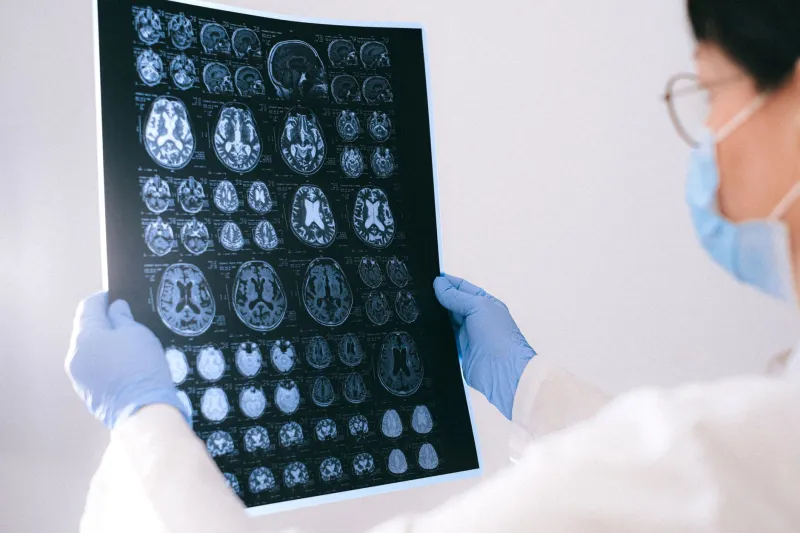
MRI with diffusion-weighted imaging (DWI) has become an especially valuable tool. In CJD, this imaging technique often reveals characteristic patterns of restricted diffusion in the cortex and basal ganglia—findings that are distinctive enough to significantly raise clinical suspicion. While not definitively diagnostic on their own, these MRI patterns, when combined with other findings, carry substantial weight in the evaluation process.
Cerebrospinal fluid (CSF) testing involves a lumbar puncture to obtain fluid from around the spinal cord. The presence of certain biomarkers—most notably real-time quaking-induced conversion (RT-QuIC), a highly sensitive and specific test for prion disease—has dramatically improved the accuracy of CJD diagnosis in living patients. Our center utilizes this assay routinely as part of the diagnostic workup.
Electroencephalography (EEG) may reveal characteristic periodic sharp wave complexes in some CJD subtypes, offering another layer of diagnostic information.
A definitive CJD diagnosis has historically required neuropathological examination of brain tissue, either through biopsy or autopsy. However, advances in biomarker testing have made it possible to reach a probable diagnosis with high confidence during the patient's lifetime, which is crucial for appropriate care planning.
Why Early Consultation Matters
Some families wonder whether there is value in pursuing a specialized evaluation if CJD has no approved cure. This is a reasonable and deeply human question, and it deserves a direct answer.
First, an accurate diagnosis prevents unnecessary treatments for conditions that CJD is mimicking. Some patients undergo extensive workups for autoimmune encephalitis, infectious meningitis, or metabolic disorders—conditions that, unlike CJD, may respond to treatment. Establishing the correct diagnosis as early as possible ensures that care efforts are appropriately directed.
Second, a CJD diagnosis opens the door to palliative care planning and supportive services that can meaningfully improve quality of life for both patients and caregivers. Newark CJD Center partners with palliative care specialists, social workers, and community support organizations throughout the Newark metropolitan area to ensure that families receive comprehensive guidance from the moment of diagnosis.
Third, early engagement with a specialized center creates the opportunity to discuss participation in research protocols and clinical trials. While no disease-modifying therapy is currently approved for CJD, several investigational approaches are under active study, and some patients may be eligible to participate.
When to Reach Out to Newark CJD Center
If you are observing rapid cognitive changes, unexplained psychiatric symptoms, movement abnormalities, or any combination of the signs described above in a family member, we encourage you not to wait. You do not need a formal CJD diagnosis to contact our center—our team is accustomed to evaluating patients in whom the diagnosis is uncertain, and that uncertainty itself is often the starting point for our work.
Our specialists can coordinate with your primary care provider or existing neurologist to review records, discuss findings, and recommend next steps. We understand that the prospect of a serious neurological illness is frightening, and our goal is to provide not only clinical expertise but also the kind of compassionate guidance that families in Newark and the surrounding region deserve.
Reaching out early is not an act of pessimism. It is an act of care.