Your Diagnosis Is Not Final: A Step-by-Step Guide to Pursuing a Second Opinion for Suspected CJD in the Newark Region

Receiving an inconclusive neurological evaluation is one of the most disorienting experiences a patient or family can face. You came to a physician seeking clarity. You left with more questions than answers — or worse, with an explanation that does not seem to account for the full scope of what you are experiencing. In the context of rare and rapidly progressive neurological diseases like Creutzfeldt-Jakob disease, this ambiguity is not merely frustrating. It is clinically dangerous.
At the Newark CJD Center, we understand that navigating the medical system under these circumstances requires both emotional resilience and practical strategy. The purpose of this guide is to provide Newark-area patients and their families with a concrete, actionable roadmap for obtaining the second opinions that can, quite literally, save lives.
Why Second Opinions Matter More in Rare Disease
In common conditions, an initial diagnosis is frequently correct. The clinical presentation is familiar, the testing protocols are standardized, and the physician has encountered similar cases many times before. Rare diseases operate under fundamentally different conditions. A general neurologist may see only one or two cases of CJD over the course of an entire career. The symptom profile is variable and can overlap significantly with more prevalent conditions. Diagnostic tools are specialized and not universally available.
This is not a criticism of any individual physician. It is a structural reality of rare disease medicine. The appropriate response is not to lose confidence in the medical system — it is to understand that the system works best when patients actively participate in directing their own care. Seeking a second opinion in the context of a possible CJD diagnosis is not a sign of distrust. It is a medically sound and widely endorsed practice.
Research consistently demonstrates that second opinions in complex neurological cases result in meaningful changes to diagnosis or treatment plan in a significant proportion of cases. For diseases as serious and time-sensitive as CJD, the calculus is clear: the potential benefit of seeking additional expert evaluation far outweighs the inconvenience of doing so.
Step One: Organize Your Medical Records Before You Make a Single Call
The most common mistake patients make when pursuing a second opinion is contacting a new specialist before assembling a complete and well-organized medical record. A specialist seeing you for the first time has no clinical history to work from. Without that history, the consultation becomes a starting-over rather than a building-upon.
Begin by requesting a complete copy of your records from every provider who has evaluated you. Under the Health Insurance Portability and Accountability Act, you have a legal right to access your medical records, and providers are required to furnish them in a timely manner. Be specific in your request: ask for all clinical notes, laboratory results, imaging studies and their associated radiology reports, electroencephalogram (EEG) reports if applicable, and any pathology findings.
Once you have gathered these documents, organize them chronologically. Create a one-page summary of your symptom timeline — when each symptom first appeared, how it has evolved, and what evaluations have been performed to date. This summary will be one of the most useful documents you bring to any subsequent appointment.
For imaging studies, request the actual image files on a CD or through a digital transfer, not merely the written radiology report. Many advanced diagnostic centers prefer to review original imaging rather than rely on a secondary interpretation.
Step Two: Identify the Right Specialists and Institutions
Not all neurology practices are equally equipped to evaluate suspected prion disease. When seeking a second opinion for possible CJD, you should be looking for one of the following: a neurologist with documented experience in prion diseases or rapidly progressive dementias; a university-affiliated academic medical center with a dedicated neurology department; or a National Prion Disease Pathology Surveillance Center-affiliated institution.
In the broader New York-New Jersey metropolitan region, several major academic medical centers offer advanced neurological diagnostic capabilities relevant to CJD evaluation. These include institutions affiliated with Rutgers Health in Newark, as well as major academic centers across the Hudson River in Manhattan. The proximity of Newark to one of the world's most concentrated medical research corridors is a genuine advantage for patients in this region.
When calling to schedule a consultation, be explicit about the nature of your concern. State that you are seeking evaluation for a possible rapidly progressive neurological condition and that CJD has been raised as a diagnostic consideration. This framing ensures that your case is routed to the appropriate subspecialist rather than a general neurology queue.
Step Three: Know the Diagnostic Tools That Should Be on the Table
One of the most empowering things a patient or family member can do before a second opinion consultation is to develop a working familiarity with the diagnostic tools relevant to CJD. This knowledge allows you to ask specific, informed questions and to understand whether the evaluation you are receiving is truly comprehensive.
Key diagnostic modalities in CJD evaluation include:
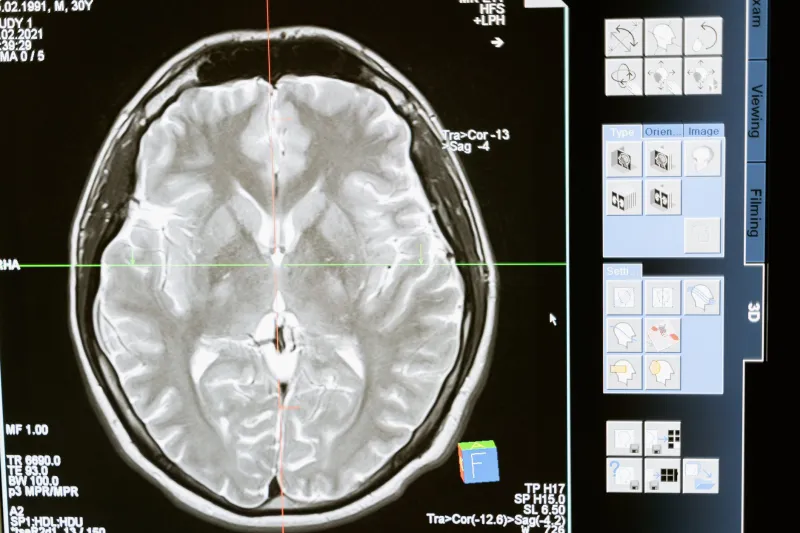
MRI with diffusion-weighted imaging (DWI). This specialized MRI sequence can reveal characteristic patterns of signal change in the brain associated with prion disease. Not all MRI protocols include DWI by default; confirm that it will be included.
Cerebrospinal fluid (CSF) analysis via lumbar puncture. The RT-QuIC (real-time quaking-induced conversion) assay performed on CSF has become one of the most sensitive available tests for detecting abnormal prion proteins. Ask specifically whether this test has been ordered or is being considered.
Electroencephalogram (EEG). In certain subtypes of CJD, EEG can reveal characteristic periodic sharp wave complexes. An EEG performed and interpreted by a neurophysiologist experienced in prion disease is more informative than a standard clinical EEG.
Genetic testing. For patients with a family history of neurological disease or for younger patients presenting with atypical features, testing for mutations in the PRNP gene may be clinically relevant.
If any of these modalities have not been offered or discussed, raise them directly with your consulting physician.
Step Four: Navigate Insurance and Referral Systems Strategically
Insurance authorization requirements represent one of the most common practical barriers to timely specialist access. Understanding how to navigate these systems efficiently can prevent weeks of unnecessary delay.
If your health insurance requires a referral from a primary care physician before covering a specialist visit, contact your PCP's office immediately and explain the urgency of your situation in explicit terms. Use the phrase "rapidly progressive neurological symptoms" when speaking with office staff, as this language may expedite authorization in many insurance systems.
For patients whose preferred specialist is out of network, many insurance plans include provisions for out-of-network coverage when in-network providers lack the specialized expertise necessary to evaluate a specific condition. Request a written statement from your current neurologist indicating that your case requires subspecialty expertise not available within the network — this documentation can support an appeal if an out-of-network authorization is initially denied.
If you encounter significant insurance obstacles, contact the Newark CJD Center directly. Our patient navigation resources include guidance on insurance appeals and connections to patient advocacy organizations that can provide additional support.
Step Five: Prepare for the Consultation Itself
Arrive at your second opinion consultation with your organized medical records, your symptom timeline summary, and a written list of questions. Bring a family member or trusted friend if at all possible — a second set of ears in a high-stakes medical conversation is invaluable.
Among the questions worth asking your consulting specialist:
- Based on the records I have provided, do you believe my current diagnostic workup has been sufficiently comprehensive?
- Are there specific tests you would recommend that have not yet been performed?
- What is your assessment of the likelihood that my symptoms represent a prion disease?
- What is the appropriate next step if this evaluation also returns inconclusive?
- Are there clinical trials or research programs for which I might be eligible?
Documentation matters. Request a detailed written summary of the consultation, including the physician's clinical impressions and any recommended next steps, before you leave the appointment or within a few days of the visit.
The Broader Commitment at Newark CJD Center
Advancing care for patients with rare and devastating neurological diseases requires more than clinical expertise. It requires a commitment to empowering patients and families with the knowledge and tools to navigate a complex system on their own terms. A second opinion is not a challenge to your physician's competence. It is an affirmation that your health — and your life — are worth every effort to get the diagnosis right.
If you are facing uncertainty about a neurological diagnosis in the Newark area and would like guidance on next steps, the Newark CJD Center is here to help.