Navigating the Unknown: Emotional and Practical Strategies for Families Facing a Possible CJD Diagnosis
Few experiences in modern medicine are as disorienting as waiting for a diagnosis of Creutzfeldt-Jakob disease. The symptoms often arrive without warning — a sudden change in personality, rapid cognitive decline, problems with coordination — and the path to confirmation can stretch across weeks or even months. For families in the Newark area and beyond, that waiting period can feel like standing at the edge of a cliff in the dark. You know something is wrong. You do not yet know how far the fall will be.
At the Newark CJD Center, we work alongside patients and families at every stage of this journey. What we have observed, consistently, is that the diagnostic period itself carries a unique psychological burden — one that deserves as much attention as the clinical workup. This article is intended to offer both validation and practical tools for those who are living inside that uncertainty right now.
Why CJD Diagnosis Takes Time — and Why That Is So Hard
CJD is a rare prion disease, affecting approximately one to two people per million globally each year. Its rarity is precisely what makes it so difficult to diagnose quickly. Many of its early symptoms — memory lapses, behavioral shifts, difficulty with balance — overlap with far more common conditions, including Alzheimer's disease, Lewy body dementia, and certain autoimmune encephalitides. Physicians must often rule out these other diagnoses before CJD becomes the primary working hypothesis.
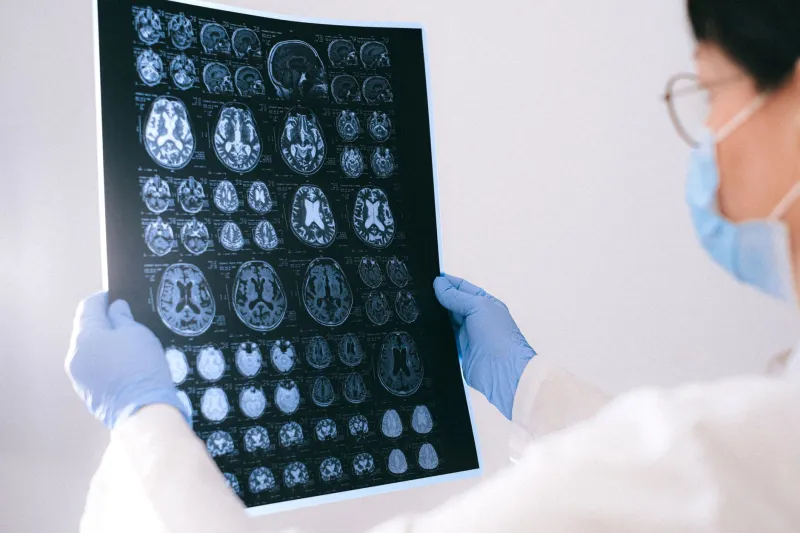
Diagnostic tools such as MRI imaging, cerebrospinal fluid analysis, and electroencephalography (EEG) can provide supporting evidence, but no single test offers a definitive answer in every case. The RT-QuIC assay, a cerebrospinal fluid test that detects abnormal prion protein, has significantly improved diagnostic accuracy in recent years, yet even this advanced tool requires careful clinical interpretation.
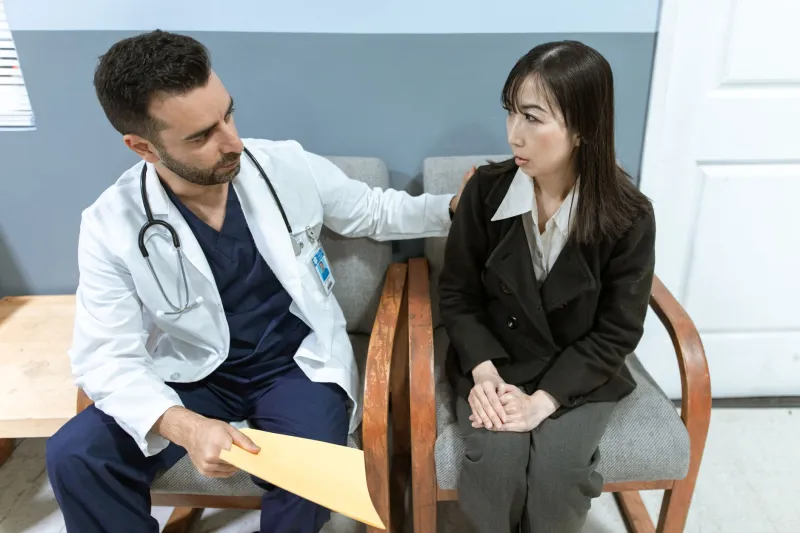
For families, the practical consequence is weeks of ambiguity. They may hear phrases like "we're still ruling things out" or "the results are consistent with, but not conclusive of" — language that is medically precise but emotionally devastating. Clinicians at our center are trained to communicate these uncertainties with transparency and compassion, but we also recognize that no amount of careful phrasing fully eases the weight of not knowing.
The Emotional Landscape of Diagnostic Uncertainty
Research on families navigating rare neurological diagnoses consistently identifies a cluster of emotional responses during the pre-diagnosis period: anticipatory grief, hypervigilance, social withdrawal, and what psychologists sometimes call "ambiguous loss" — the grief of losing someone who is still physically present.
Dr. Maria Okonkwo, a neuropsychologist who consults with patients referred to the Newark CJD Center, describes it this way: "Families often tell me they feel like they're mourning and hoping at the same time. They're watching someone they love change, and they're terrified to name what might be happening because naming it makes it real. That tension is exhausting in a way that's very difficult to explain to people who haven't lived it."
Anxiety is nearly universal in this period. So is a compulsive need to research — families frequently spend hours online, reading case studies, joining forums, and trying to build their own differential diagnosis. While information-gathering can feel empowering, it can also amplify distress when individuals encounter worst-case scenarios without the clinical context to interpret them accurately.
Evidence-Based Coping Strategies
Mental health professionals who specialize in medical uncertainty recommend several approaches that have demonstrated effectiveness in research settings and clinical practice.
Structured information management. Rather than engaging in open-ended internet searches at any hour, families may benefit from setting defined windows for research and relying on vetted sources — including the resources provided by the Newark CJD Center and the CJD Foundation. This approach preserves the sense of agency that information-seeking provides while reducing the risk of late-night spirals into uncontextualized medical literature.
Anticipatory coping planning. Working with a social worker or counselor to develop contingency plans — even before a diagnosis is confirmed — can reduce the cognitive load of uncertainty. Knowing that you have thought through housing modifications, medical power of attorney, or caregiver rotation schedules does not mean you are giving up hope. It means you are building a framework that can be adapted regardless of what the diagnosis turns out to be.
Mindfulness-based stress reduction (MBSR). Multiple studies have shown that MBSR programs reduce anxiety and improve quality of life in caregivers of individuals with serious neurological illness. Several Newark-area hospitals and wellness centers offer MBSR courses, and virtual options have expanded access significantly since 2020.
Peer connection. Speaking with others who have walked a similar path can be profoundly normalizing. The CJD Foundation operates a family support network that connects individuals across the country, including families in New Jersey. Our center can facilitate these introductions upon request.
Practical Steps During the Diagnostic Period
Beyond emotional support, there are concrete actions families can take to feel more grounded during the evaluation process.
Keep a symptom journal. Detailed, timestamped observations about behavioral changes, motor symptoms, and cognitive fluctuations are invaluable to the clinical team and give caregivers a productive outlet for their vigilance.
Designate a single point of contact. In larger families, having one person serve as the primary liaison with the medical team reduces the risk of miscommunication and ensures that information is interpreted consistently.
Engage social work services early. Newark's major health systems, including RWJBarnabas Health and Hackensack Meridian Health, have dedicated social work teams experienced in supporting families through serious neurological illness. These professionals can help navigate insurance questions, identify respite care resources, and connect families with community services before a crisis point is reached.
Discuss legal and financial planning sooner rather than later. If the patient is still capable of participating in advance care planning, this window may be narrower than it appears. An elder law attorney familiar with New Jersey statutes can help families establish durable power of attorney and healthcare directives with appropriate urgency.
You Are Not Alone in This
The Newark CJD Center exists precisely because rare diseases deserve dedicated, sustained attention — not just at the laboratory bench, but at the bedside and in the waiting room. Our multidisciplinary team includes neurologists, neuropsychologists, social workers, and patient navigators who understand the particular contours of a prion disease journey.
If you or a family member is currently in the diagnostic process, we encourage you to reach out. Whether you need help interpreting test results, a referral to mental health support, or simply someone who will answer your questions without rushing you, we are here. Uncertainty is not something to be endured alone. It is something to be navigated — with the right people beside you.