Lost in the Differential: How New Jersey Neurologists Are Failing to Catch CJD — and What You Can Do About It
When a 67-year-old retired schoolteacher from Montclair began experiencing rapid memory loss, personality changes, and unexplained muscle jerking, her primary care physician referred her to a local neurologist. Over the following three months, she received two separate diagnoses — first Alzheimer's disease, then Lewy body dementia. It was not until her family pressed for a second opinion at a specialized center that Creutzfeldt-Jakob disease was identified. By that point, the window for certain supportive interventions had narrowed considerably.
Her story, while deeply personal, is far from unique. Across New Jersey, patients with CJD are routinely misclassified as having more common neurodegenerative conditions. The consequences — delayed care planning, inappropriate treatments, and profound family distress — underscore an urgent need for greater diagnostic awareness throughout the state's medical community.
Why CJD Looks Like So Many Other Diseases
CJD is a prion disease, meaning it is caused by abnormally folded proteins that progressively damage brain tissue. Unlike Alzheimer's or Parkinson's, which typically unfold over years or even decades, CJD can advance from subtle cognitive changes to severe neurological impairment within weeks to months. This rapid trajectory is one of its most distinguishing features — yet in early stages, the clinical picture is far from clear.
Initial symptoms frequently include forgetfulness, mood disturbances, visual disturbances, and general confusion — presentations that overlap substantially with Alzheimer's disease, frontotemporal dementia, autoimmune encephalitis, and even severe depression. Myoclonus, the involuntary muscle jerking that often appears as the disease progresses, may be mistakenly attributed to medication side effects or movement disorders such as Parkinson's disease.
Neurologists practicing in busy outpatient settings are trained to think probabilistically. Because Alzheimer's disease affects an estimated 6.7 million Americans while CJD strikes roughly one in one million people annually, a clinician seeing a patient with rapid cognitive decline is statistically far more likely to be looking at a common condition. This statistical reasoning, while understandable, can work against patients who fall outside the norm.
Systemic Barriers Within New Jersey's Clinical Landscape
The diagnostic challenge is compounded by structural issues within the healthcare system. Neurologists consulted at Newark-area institutions have noted several recurring obstacles.
First, there is limited familiarity with the full spectrum of prion disease presentations. CJD is not a condition most neurologists encounter more than a handful of times throughout an entire career. Without regular exposure, subtle early indicators — such as cerebellar ataxia occurring alongside cognitive decline, or the characteristic psychiatric prodrome seen in variant CJD — may not trigger appropriate clinical suspicion.
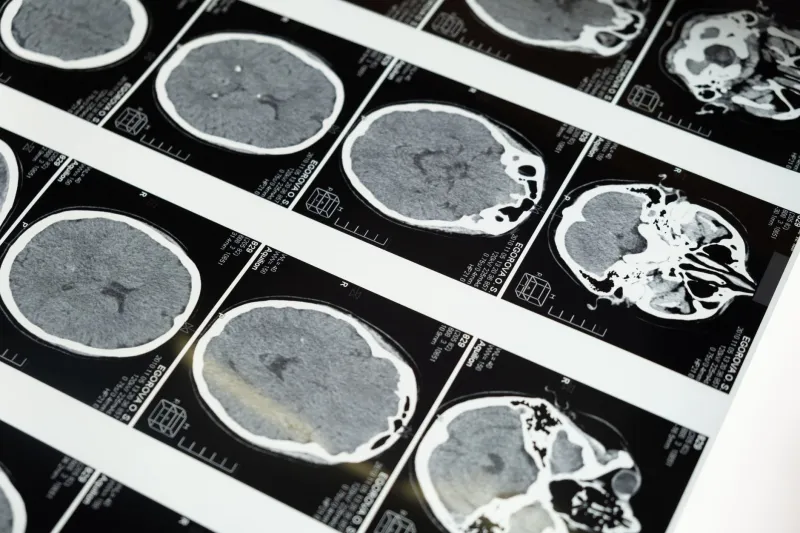
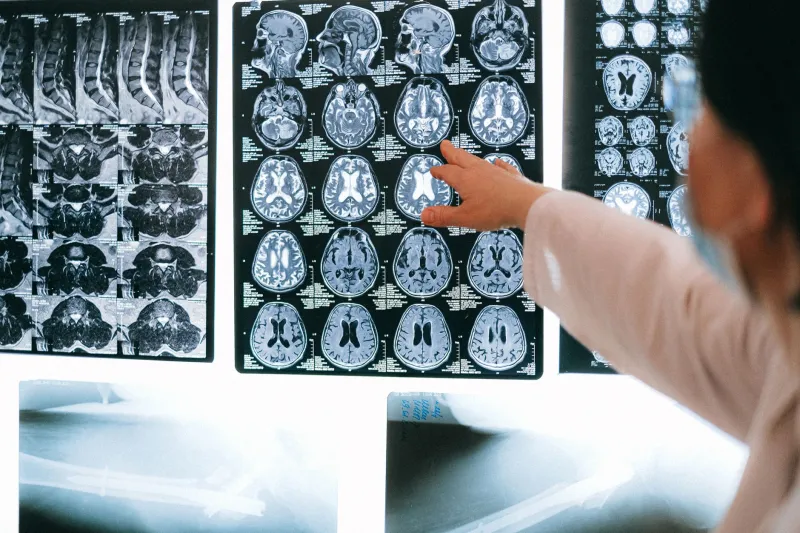
Second, the diagnostic workup for CJD requires specific testing that is not part of a standard dementia evaluation. The real-time quaking-induced conversion assay, known as RT-QuIC, performed on cerebrospinal fluid, has become a highly sensitive and specific marker for prion disease. However, ordering this test requires a clinician to first consider CJD as a possibility. MRI findings, particularly diffusion-weighted imaging showing cortical ribboning or basal ganglia signal changes, can also support the diagnosis — but only if the radiologist and ordering physician are attuned to what they are looking for.
Third, referral pathways to specialized centers are inconsistently utilized. New Jersey patients often cycle through multiple providers before reaching a facility equipped to manage the full diagnostic complexity of suspected prion disease.
Real Patients, Real Delays
The Newark CJD Center has documented numerous cases in which the interval between symptom onset and accurate diagnosis exceeded ninety days. In a disease where median survival from symptom onset is measured in months — typically four to six months for the most common sporadic form — a three-month diagnostic delay is not a minor inconvenience. It represents a substantial portion of the time a patient and family have to make informed decisions about care goals, legal and financial arrangements, and the nature of the support they wish to receive.
Families frequently describe a disorienting experience during this period. They watch a loved one deteriorate while receiving treatments aimed at the wrong condition — cholinesterase inhibitors prescribed for suspected Alzheimer's, antipsychotics for behavioral symptoms that are actually manifestations of prion-related neurological damage. These medications carry their own side effect profiles and do nothing to address the underlying disease.
The emotional toll of misdiagnosis extends beyond the patient. Caregivers who have been told their loved one has a slowly progressive condition are often wholly unprepared for the accelerated decline that CJD produces. The psychological whiplash of a corrected diagnosis — combined with grief, fear, and logistical urgency — can be devastating.
Questions Every Patient Should Ask Their Neurologist
Advocating for oneself or a loved one within a complex medical system requires preparation. The following questions are designed to help Newark-area patients and families ensure that CJD receives appropriate consideration during a neurological workup.
Regarding the diagnostic process:
- Has prion disease been considered as part of the differential diagnosis? If not, why not?
- What specific tests are being ordered to evaluate for CJD, including MRI with diffusion-weighted imaging and cerebrospinal fluid analysis with RT-QuIC?
- Has a lumbar puncture been recommended, and if not, what is the reasoning?
- Are there any atypical features in the presentation that might warrant evaluation at a specialized prion disease center?
Regarding the clinical picture:
- How quickly have the symptoms progressed, and does that timeline fit the suspected diagnosis?
- Are there features such as myoclonus, cerebellar signs, or visual disturbances that might point toward a prion disease?
- Has an electroencephalogram been performed, and has it shown any periodic sharp wave complexes?
Regarding referral and second opinions:
- Would a referral to a center with expertise in prion disease be appropriate?
- Is there a National Prion Disease Pathology Surveillance Center or affiliated institution that should be consulted?
Patients should feel empowered to request documentation of their diagnostic reasoning and to seek second opinions without concern about straining the physician relationship. A qualified neurologist will welcome the engagement of an informed patient and family.
The Role of Specialized Centers in Closing the Gap
Facilities such as the Newark CJD Center exist precisely because general neurology practice, however skilled, cannot be expected to maintain deep expertise in a condition as rare as prion disease. Specialized centers maintain current knowledge of evolving diagnostic criteria, participate in national surveillance networks, and have established protocols for evaluating suspected CJD with appropriate urgency.
For families in the Newark area who are concerned that a loved one may have been misdiagnosed — or who simply want a more thorough evaluation — reaching out to a specialized center is a reasonable and often essential step. Early and accurate diagnosis does not change the course of CJD, but it changes everything about how patients and families are able to face it.
The systemic barriers that allow CJD to be missed are real, but they are not insurmountable. With greater awareness, more assertive patient advocacy, and strengthened referral relationships between community neurologists and specialized centers, New Jersey can do better for its most vulnerable patients.