When the Diagnosis Is Wrong: Understanding Why CJD Is Frequently Overlooked and What Newark Patients Can Do About It
For most families, the journey toward a Creutzfeldt-Jakob disease diagnosis does not begin with clarity. It begins with confusion — a slow accumulation of symptoms that resist easy explanation, a succession of specialist appointments, and, too often, a series of incorrect conclusions. CJD, a rare and rapidly progressive prion disease, is one of the most diagnostically challenging conditions a neurologist can encounter. Understanding why that is — and what can be done about it — is essential knowledge for patients, caregivers, and referring physicians throughout the Newark area.
The Problem of Symptomatic Overlap
At its core, the diagnostic difficulty surrounding CJD stems from a fundamental characteristic of the disease: its early symptoms are nearly indistinguishable from those of far more common neurological conditions. Memory impairment, behavioral changes, difficulty with coordination, and visual disturbances are all hallmark features of CJD's initial presentation. They are also hallmark features of Alzheimer's disease, frontotemporal dementia, Lewy body dementia, and Parkinson's disease — conditions that affect millions of Americans and represent the first diagnostic consideration for most clinicians.
When a patient in their late fifties or sixties presents with progressive cognitive decline and gait instability, the statistical probability heavily favors one of those more prevalent diagnoses. CJD, by contrast, affects roughly one to two people per million annually in the United States. The rarity of the disease creates a natural cognitive bias in clinical settings: physicians are trained to consider common conditions first, and CJD simply does not occupy a prominent position in the initial differential.
"The challenge is not that clinicians are making careless errors," notes one Newark-based neurologist with experience in prion disease evaluation. "The challenge is that CJD presents, especially in its early weeks, in a way that is genuinely consistent with conditions they see far more frequently. The clinical picture only becomes distinctive as the disease progresses — and by that point, precious time has already passed."
The Diagnostic Window and Why Timing Matters
CJD progresses with a speed that sets it apart from virtually every other neurodegenerative condition. While Alzheimer's disease may unfold over a decade or more, most CJD patients experience severe neurological decline within months of symptom onset. The median survival following diagnosis is measured in weeks to a few months for sporadic CJD, the most common form of the disease.
This rapid trajectory makes early and accurate diagnosis not merely an academic concern but a genuine clinical and human imperative. While there is currently no disease-modifying treatment for CJD, an accurate diagnosis carries profound implications. It allows families to make informed decisions about care planning, hospice enrollment, and end-of-life preferences. It opens the door to enrollment in clinical trials and research studies, including those conducted through institutions serving the Newark community. It also enables appropriate genetic counseling in cases where a familial form of the disease may be involved.
A delayed or incorrect diagnosis, by contrast, may mean that patients receive treatments appropriate for Alzheimer's or Parkinson's disease — interventions that carry their own risks and side effects — while the actual disease advances unchecked.
Distinguishing CJD: The Tests That Matter
Several diagnostic tools have significantly improved clinicians' ability to identify CJD with greater confidence, though none offers the absolute certainty of a brain biopsy or post-mortem neuropathological examination.
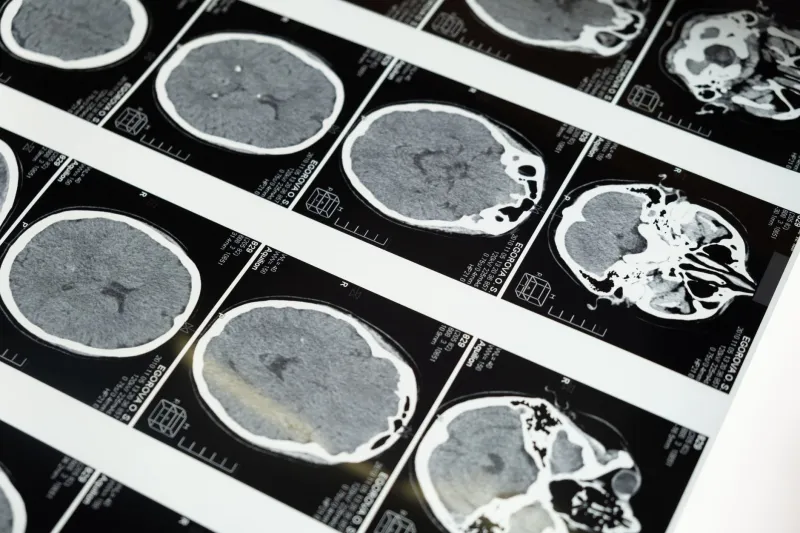
MRI with diffusion-weighted imaging (DWI) has emerged as one of the most sensitive non-invasive tools for CJD evaluation. Characteristic patterns of restricted diffusion in the cortex and basal ganglia — a phenomenon sometimes described as "cortical ribboning" — are highly suggestive of prion disease and differ markedly from the imaging patterns seen in Alzheimer's or vascular dementia.
Cerebrospinal fluid (CSF) analysis for the presence of the RT-QuIC (real-time quaking-induced conversion) assay represents a significant advance in prion disease diagnostics. This test detects misfolded prion proteins in CSF with a high degree of sensitivity and specificity, and its availability has expanded considerably in recent years. Older CSF markers, including 14-3-3 protein, remain in use but carry a higher rate of false positives in the context of other acute neurological conditions.
Electroencephalography (EEG) may reveal periodic sharp wave complexes characteristic of CJD in some patients, though this finding is more reliably present in later disease stages.
The critical point, emphasized by neurologists at Newark CJD Center, is that these specialized tests are not routinely ordered when a patient presents with apparent dementia. Families and referring physicians must be prepared to specifically request prion disease evaluation when the clinical picture — particularly the speed of decline — raises concern.
How Patients and Families Can Advocate Effectively
Advocating for appropriate diagnostic evaluation within the healthcare system is rarely straightforward, particularly when a family is simultaneously managing the emotional weight of watching a loved one decline. Nevertheless, informed advocacy can meaningfully alter the diagnostic course.
Document the timeline of symptoms meticulously. The rapidity of CJD's progression is one of its most distinguishing features. Keeping a detailed written record of when specific symptoms appeared and how quickly they worsened provides clinicians with data that standardized office assessments may not capture. A patient who has progressed from mild forgetfulness to significant cognitive impairment over six to eight weeks presents a very different picture than one whose decline has unfolded over several years.
Request a neurology referral with prion disease expertise. Primary care physicians and general neurologists may have limited direct experience with CJD. Families who believe prion disease may be a possibility should specifically ask for evaluation at a center with relevant expertise. Newark CJD Center offers consultative services precisely for this purpose.
Ask directly about RT-QuIC testing. Many families are unaware that this specific diagnostic test exists. Asking whether it has been ordered — or why it has not been considered — is an entirely appropriate question to raise with any treating neurologist.
Do not accept diagnostic certainty prematurely. If a patient has received a diagnosis of Alzheimer's or another dementia but continues to decline at an unusually rapid pace, it is reasonable and appropriate to seek a second opinion. A diagnosis of exclusion should never foreclose further inquiry when the clinical course does not align with expectations.
The Role of Newark CJD Center in Closing the Diagnostic Gap
Newark CJD Center was established, in part, to address precisely the kind of diagnostic delay described throughout this article. The center maintains active relationships with neurologists, hospitalists, and primary care providers across the region, offering consultation support and educational resources designed to increase awareness of CJD's presentation among the broader clinical community.
For families who have received a diagnosis that does not feel complete — or who are watching a loved one decline at a pace that defies explanation — reaching out to a specialized center is not an act of distrust toward existing providers. It is an act of diligence. In a disease where time is measured not in years but in weeks, that diligence can make all the difference.
If you have questions about CJD diagnostic evaluation or wish to request a consultation, contact Newark CJD Center directly through our patient services line.