Carrying the Weight Together: How Newark-Area CJD Caregivers Are Finding Strength in Community

There is a particular kind of loneliness that accompanies a CJD diagnosis — not only for the patient, but for everyone who loves them. Unlike the slow, incremental losses associated with many chronic illnesses, Creutzfeldt-Jakob disease compresses an entire caregiving journey into a matter of weeks or months. Families are thrust without preparation into decisions about neurological care, hospice services, and end-of-life planning, often before they have had time to absorb what the diagnosis actually means. The medical system, for all its resources, rarely has a roadmap for this particular experience.
And yet, across Essex County and the broader Newark metropolitan area, something quietly remarkable is happening. Caregivers who have walked this road — or who are walking it right now — are finding one another. They are building connections that the healthcare system does not always provide, sharing knowledge that no brochure fully captures, and offering the specific kind of understanding that can only come from lived experience.
The Unique Demands of CJD Caregiving
To understand why community matters so profoundly to CJD caregivers, it helps to understand what makes this caregiving experience categorically different from others.
Most neurodegenerative diseases progress along a trajectory measured in years. Families caring for someone with Alzheimer's disease, for example, have time — however painful — to adjust, to learn, to prepare. CJD does not offer that accommodation. The disease's median course from symptom onset to death is approximately four to six months for the most common form, sporadic CJD. Within that compressed timeline, a patient may transition from mild cognitive changes to complete dependence, loss of mobility, and loss of communication. Caregivers must absorb these changes in real time, often while simultaneously managing the administrative demands of insurance navigation, care coordination, and legal planning.
The emotional dimension is equally severe. Because CJD is so rare, many caregivers report that friends, extended family members, and even some healthcare providers are unfamiliar with the disease. Explaining a diagnosis that most people have never heard of — while simultaneously grieving and caregiving — creates a particular form of exhaustion. "You spend so much energy just getting people to understand what is happening," one Newark-area caregiver shared during a recent support session facilitated by Newark CJD Center. "There is almost no energy left for yourself."
The sense of isolation is compounded by the speed of the disease. Social networks that might otherwise rally around a family during a prolonged illness often struggle to keep pace with CJD's rapid progression. By the time the broader community has begun to understand the situation, the caregiving phase may already be drawing to a close.
What Local Support Looks Like
Newark CJD Center has worked to address the caregiver support gap through a combination of direct services and community-building initiatives. These efforts are grounded in a recognition that clinical care for the patient, however important, represents only one dimension of what families need.
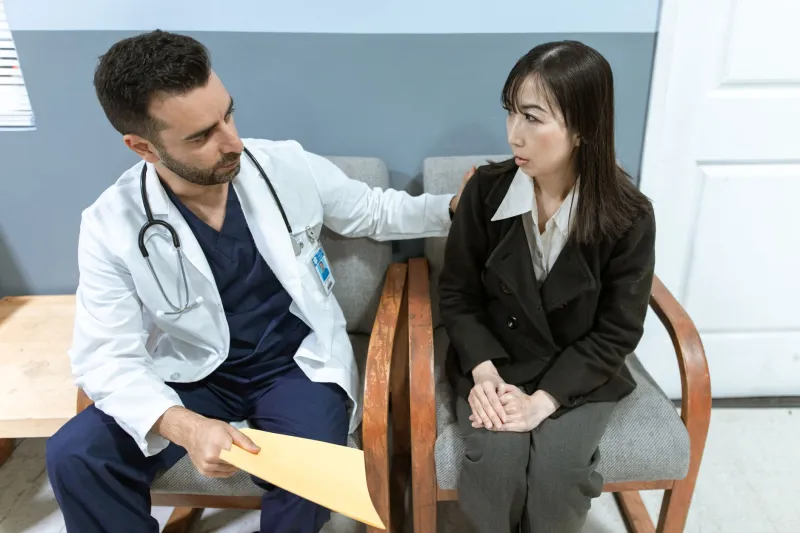
Caregiver support groups meet regularly and are open to individuals at any stage of the CJD journey — those currently in active caregiving, those who have recently experienced a loss, and those who received a diagnosis and are preparing for what lies ahead. These sessions are facilitated by social workers and patient care coordinators with specific experience in prion disease, ensuring that the guidance offered reflects the realities of this particular illness rather than the generalities of dementia caregiving more broadly.
One-on-one social work consultation is available for families navigating specific practical challenges: understanding hospice eligibility, communicating with employers about leave, accessing emergency financial assistance, or coordinating care across multiple providers. For many families, having a single knowledgeable contact point within the healthcare system reduces the administrative burden significantly during an already overwhelming period.
Peer connection programs pair newly diagnosed families with individuals who have previously served as CJD caregivers and have volunteered to offer support. This peer model acknowledges something that professional services alone cannot fully provide: the particular comfort of speaking with someone who has been precisely where you are.
Practical Strategies from the Caregiver Community
Through conversations with Newark-area caregivers — both those currently in the midst of CJD care and those who have moved into bereavement — several consistent themes emerge regarding what helps and what does not.
Accept help before you believe you need it. CJD caregivers who waited until they were exhausted to accept assistance from family, friends, or professional services consistently report wishing they had reached out sooner. The disease moves faster than most people anticipate, and building a support infrastructure early — before a crisis — creates more stability throughout the caregiving period.
Communicate specifically, not generally. Well-meaning friends and neighbors often offer vague support: "Let me know if you need anything." Caregivers who found this most useful were those who had prepared specific, concrete requests — a weekly grocery pickup, help with transportation to appointments, an hour of companionship so the primary caregiver could rest. Specific asks are easier for others to fulfill and reduce the cognitive burden of figuring out what to request in the moment.
Maintain at least one consistent personal anchor. Whether it is a brief daily walk, a standing phone call with a trusted friend, or a few minutes of quiet before the household wakes, caregivers who preserved some small ritual for themselves reported greater emotional resilience over the course of the caregiving period. This is not selfishness — it is sustainability.
Document everything. From medication schedules to conversations with insurance representatives to the names of every provider involved in care, meticulous documentation reduces the likelihood of errors and provides a record that other family members can reference. Several caregivers in the Newark community have begun sharing document templates with one another through the center's peer network.
Engage with hospice early. Many families associate hospice care with giving up or with imminent death. In practice, hospice services — which become available when a physician certifies that a patient's prognosis is six months or less — provide substantial support not only for the patient but for the entire family unit. Nursing visits, aide assistance, chaplaincy services, and bereavement counseling are all components of comprehensive hospice care. Families who engaged hospice early in the CJD trajectory consistently reported that it meaningfully reduced caregiver burden during the most intensive phase of care.
Grief That Begins Before Loss
One of the most psychologically complex aspects of CJD caregiving is the phenomenon that clinicians call anticipatory grief — the mourning that begins not after a loved one dies, but during the illness itself, as the person one knew gradually becomes unreachable.
Caregivers in the Newark community speak of this experience with remarkable candor. They describe grieving the loss of conversation before their loved one stopped speaking, grieving the loss of recognition before their loved one stopped knowing them, grieving the future they had imagined together while their loved one was still physically present. This form of grief is real, it is valid, and it is poorly served by a cultural framework that treats grief as something that begins at the moment of death.
Newark CJD Center's bereavement services are available both during the caregiving period and after loss, with the explicit recognition that the emotional work of CJD does not follow a tidy timeline. Grief counseling, peer support, and memorial programming are all components of the center's commitment to families beyond the clinical encounter.
You Are Not Navigating This Alone
The CJD caregiving experience is, by its nature, one of the most demanding a family can face. But it need not be a solitary one. The community of caregivers forming across the Newark area — connected through Newark CJD Center's programs and through their own growing networks — represents a form of resilience that is as important as any clinical intervention.
If you are currently caring for a loved one with CJD, or if you have recently experienced a loss and are seeking support, we encourage you to reach out. Our patient and family services team is available to connect you with the resources, programs, and community that can make this journey more bearable — and to ensure that no family in Newark faces it without a hand to hold.
Contact Newark CJD Center through our website at newarkcjd.com or by calling our patient services line to learn more about caregiver support programming.