Denied and Delayed: How Insurance Barriers Are Costing Newark CJD Patients Precious Time

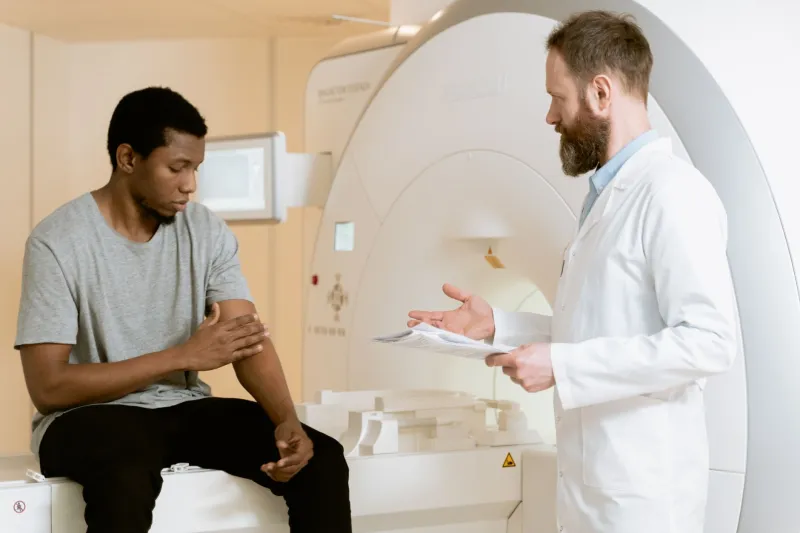
Photo: frustrated patient paperwork insurance denial hospital waiting room, via practiceforces.com
In a disease measured not in months but in weeks, every day without a confirmed diagnosis is a day lost. Creutzfeldt-Jakob disease progresses with a velocity that few neurological conditions can match, and yet many Newark-area families are discovering that the path to early detection is blocked not by the limitations of science, but by the bureaucratic machinery of insurance administration. Across New Jersey, physicians and patient advocates are documenting a troubling pattern: insurers are denying or delaying coverage for advanced diagnostic tools that neurologists consider essential for early CJD detection — tools that, when deployed promptly, can make the difference between a timely diagnosis and a preventable crisis.
The Diagnostic Tests That Matter Most — and the Denials That Follow
The landscape of CJD diagnostics has changed significantly in recent years. Cerebrospinal fluid (CSF) biomarker testing — particularly the RT-QuIC assay, which detects misfolded prion proteins with high sensitivity — has emerged as one of the most reliable early indicators of prion disease. Specialized MRI protocols, including diffusion-weighted imaging (DWI), can reveal characteristic cortical ribboning and basal ganglia abnormalities that point strongly toward CJD before clinical symptoms reach their most severe stages.
Despite this, neurologists at Newark-area medical centers report that insurers frequently classify these tests as "investigational" or "not medically necessary" during the initial review process. The result is a familiar and devastating sequence: a physician submits a prior authorization request, the insurer denies it, the patient's family scrambles to appeal, and the disease continues its relentless advance.
"The window for meaningful clinical intervention — and for families to prepare — is narrow," said one Newark-based neurologist who has treated multiple CJD patients over the past decade. "When I order an RT-QuIC or a specialized MRI sequence and the authorization is denied, we are not just dealing with paperwork. We are losing time that these patients cannot get back."
Real Families, Real Consequences
The abstract language of insurance policy translates into concrete human suffering. Consider the experience of a Newark-area family whose 67-year-old patriarch began exhibiting rapid cognitive decline, visual disturbances, and involuntary muscle jerks in the spring of last year. His primary care physician referred him to a neurologist, who promptly ordered both CSF biomarker analysis and a diffusion-weighted MRI.
The insurer denied both requests within 72 hours, citing insufficient documentation of medical necessity. The family, already overwhelmed by their loved one's deteriorating condition, was thrust into an appeals process they had no framework to navigate. By the time the denial was overturned — a process that took nearly three weeks — the patient's condition had progressed significantly, compressing the time available for palliative planning and family preparation.
"We were told to gather more records, write letters, get second opinions, fill out forms," recalled a family member. "Meanwhile, my father was getting worse every single day. The insurance company was treating this like a billing dispute. It wasn't. It was his life."
This account is not an anomaly. Clinicians and social workers affiliated with the Newark CJD Center have documented multiple cases in which diagnostic delays attributable to insurance denials extended the diagnostic limbo by two to four weeks — an eternity in the context of a disease with an average survival measured in months.
Why Insurers Deny These Tests
Understanding the logic behind these denials requires a brief look at how insurance coverage determinations are made. Most commercial insurers and Medicare Advantage plans rely on clinical coverage policies developed by medical directors who may have limited familiarity with rare neurological diseases. CJD, affecting roughly one in one million people annually in the United States, rarely appears in the routine decision-making frameworks these policies are built around.
The RT-QuIC assay, while now widely accepted within the prion disease research and clinical community, is not universally coded or categorized in ways that trigger automatic approval within insurer systems. Specialized MRI protocols similarly may not align neatly with standard imaging order codes, prompting automatic flags for review. The result is a structural mismatch: cutting-edge diagnostic medicine meets a reimbursement infrastructure that was not designed with rare, rapidly progressive diseases in mind.
"These are not bad-faith denials in every case," acknowledged one patient advocate who works closely with Newark families. "Some of them are simply the product of systems that haven't caught up with the science. But the effect on families is identical — delay, confusion, and despair."
The Appeals Process: A Roadmap for Newark Families
While the system is imperfect, it is not impenetrable. Families facing insurance denials for CJD-related diagnostic testing have legal and procedural tools available to them, and understanding these tools can meaningfully accelerate access to care.
Request a peer-to-peer review. When an initial denial is issued, the ordering neurologist has the right to speak directly with the insurer's medical reviewer. In cases involving rare diseases, this conversation often reveals that the reviewer lacks familiarity with current diagnostic standards. A neurologist who can articulate the clinical urgency and cite peer-reviewed literature supporting the test in question has a reasonable chance of reversing a denial at this stage.
File a formal internal appeal immediately. Do not wait. Most insurers are required by federal and state law to process urgent appeals within 72 hours when a treating physician certifies that delay would seriously jeopardize the patient's health. CJD unambiguously meets this threshold. Submitting a well-documented appeal — including the physician's clinical notes, relevant published guidelines, and a written statement of urgency — is the fastest path to reconsideration.
Invoke New Jersey's external appeal rights. New Jersey law provides patients the right to an independent external review when an insurer upholds a denial of care. The New Jersey Department of Banking and Insurance oversees this process. For families who have exhausted internal appeals, external review offers an independent clinical assessment that is binding on the insurer.
Contact the Newark CJD Center's patient navigation team. Our center maintains relationships with patient advocates and legal resources who specialize in insurance disputes involving rare neurological diseases. Families do not have to navigate this process alone.
Systemic Change Is Overdue
Addressing individual denials one appeal at a time is necessary but insufficient. The broader problem — that insurance infrastructure is systematically unprepared for rare, rapidly progressive diseases — demands a systemic response. Clinicians and researchers affiliated with the Newark CJD Center are actively engaged in advocacy efforts aimed at updating clinical coverage policies at major insurers, educating medical directors on the current standard of care for prion disease diagnosis, and working with state legislators to strengthen protections for patients with rare neurological conditions.
In the meantime, the burden falls disproportionately on families who are already facing one of the most devastating diagnoses in medicine. That burden is not acceptable, and it is not inevitable.
If your family is currently fighting an insurance denial for CJD-related diagnostic testing, contact the Newark CJD Center. We are here to help you understand your rights, connect with appropriate resources, and ensure that administrative barriers do not stand between your loved one and the care they urgently need.