Racing Against the Clock: How Newark Patients Can Demand Faster CJD Testing Before the Critical Window Closes

For most serious neurological diseases, the phrase "time is brain" is more than a clinical slogan — it is a measurable reality backed by outcome data. In Creutzfeldt-Jakob disease, that reality is particularly unforgiving. The interval between the appearance of first symptoms and a confirmed or strongly suspected diagnosis frequently stretches across months that patients and families cannot afford to lose. Understanding why that window exists, what happens inside it, and how Newark residents can actively compress it may be among the most important pieces of health information a family confronting unusual neurological symptoms will ever encounter.
What the Data Actually Shows About Diagnostic Timelines
Studies examining CJD case series in the United States have documented median times from symptom onset to diagnosis that routinely fall between four and seven months. In some reported cases, the delay has exceeded a year. These are not anomalies attributable to unusually obscure presentations; they reflect a systemic pattern in which a rare disease is deprioritized, misclassified, or simply not considered until a patient has already progressed through multiple stages of clinical deterioration.
The consequences of a prolonged diagnostic timeline are not merely emotional, though the emotional toll on families is substantial. Delayed diagnosis means delayed access to palliative and supportive care protocols specifically designed for prion disease. It means missed opportunities to enroll in research studies or observational registries that require participants to be identified within a certain period of symptom onset. It means that genetic counseling — critically important in familial CJD cases — is deferred for family members who may themselves carry elevated risk. And it means that care decisions are being made without the clinical framework those decisions require.
Why the Diagnostic Process Stalls
CJD's early presentation rarely announces itself clearly. The initial weeks of illness frequently involve symptoms that overlap with far more common conditions: anxiety, depression, subtle memory difficulties, unsteady gait, or visual disturbances. Primary care physicians and even general neurologists who encounter these presentations in isolation are statistically far more likely to pursue workups for Alzheimer's disease, autoimmune encephalitis, or psychiatric conditions before prion disease enters the differential.
Referral patterns compound this problem. A patient presenting to a community neurologist in Newark or the surrounding Essex County area may wait weeks for an appointment, receive an initial evaluation, undergo preliminary imaging, and then wait additional weeks for results before a specialist referral is even initiated. Each handoff in this chain introduces delay. Each inconclusive result that does not trigger an escalation of suspicion extends the timeline further.
The absence of a single definitive test also contributes to inertia. Unlike a condition confirmed by a straightforward blood draw, CJD diagnosis involves a convergence of clinical findings, imaging patterns, cerebrospinal fluid biomarkers, and electroencephalographic data. When any one of these elements is equivocal — as they often are early in the disease course — clinicians may adopt a watchful waiting posture rather than pursuing aggressive parallel testing.
The Tests Worth Requesting — and When to Request Them
Patients and families who suspect CJD should not wait for a physician to arrive at the diagnosis independently. The following diagnostic tools represent the current standard and should be specifically requested when symptom patterns raise concern:
Real-Time Quaking-Induced Conversion (RT-QuIC): This cerebrospinal fluid assay has emerged as one of the most sensitive and specific tests available for CJD, with studies reporting sensitivity exceeding 90 percent in symptomatic patients. It requires a lumbar puncture and should be performed at a laboratory with validated prion disease testing protocols. Families should ask their neurologist explicitly whether this test has been ordered and, if not, why.
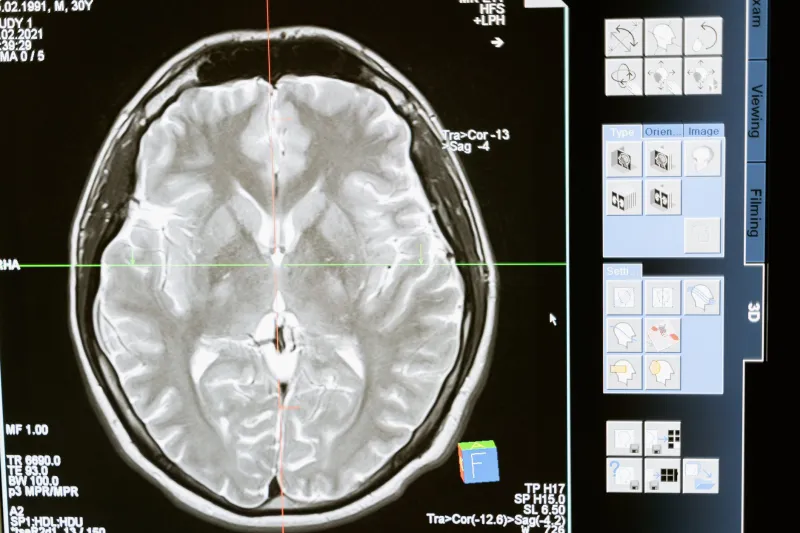
MRI with Diffusion-Weighted Imaging (DWI): Conventional brain MRI is frequently ordered in patients with rapid cognitive decline, but the specific DWI sequences that reveal the cortical ribboning and basal ganglia signal changes characteristic of CJD require deliberate protocol selection. Patients should confirm that their imaging order includes DWI sequences and that the radiologist reviewing the study has been prompted to evaluate for prion disease patterns.
Cerebrospinal Fluid 14-3-3 Protein: While less specific than RT-QuIC as a standalone marker, elevated 14-3-3 protein in CSF remains part of established diagnostic criteria and should be obtained during lumbar puncture alongside RT-QuIC testing.
Electroencephalography (EEG): Periodic sharp wave complexes on EEG are associated with CJD, particularly in the sporadic form. A normal EEG does not exclude the diagnosis, but the test is noninvasive, relatively accessible, and can contribute meaningfully to the clinical picture.
PRNP Gene Testing: In any patient with a family history of rapidly progressive dementia or prion disease, genetic testing for mutations in the PRNP gene should be pursued without delay. This testing also has implications for biological relatives who may wish to understand their own risk profile.
Red Flags That Should Trigger Immediate Neurological Escalation
Certain clinical features, when present in combination, should be treated as urgent signals requiring specialist evaluation rather than routine follow-up. These include: rapidly progressive cognitive or behavioral change occurring over weeks rather than months; myoclonus, which presents as sudden, brief, involuntary muscle jerks; cerebellar ataxia without a clear alternative explanation; visual disturbances including blurring, diplopia, or hallucinations in the context of cognitive decline; and any combination of the above in a patient with a family history of early dementia or neurological disease.
When these features appear together, the appropriate response is not to schedule a routine neurology appointment three weeks out. It is to call the neurologist's office that day, describe the symptom cluster explicitly, and use the words "rapidly progressive dementia" and "prion disease" in the conversation. Those specific terms carry weight in a triage context that a general description of confusion or memory problems does not.
How to Advocate Effectively Within the Newark Healthcare System
Advocacy in a medical context requires precision. When speaking with a physician, vague expressions of concern are less effective than specific clinical requests. A family member who says "we're worried about her memory" will receive a different response than one who says "she has developed rapidly progressive cognitive decline with myoclonus over the past six weeks, and we are asking for an urgent neurology referral with consideration of CJD in the differential."
Requesting a referral to a neurologist with specific experience in prion disease or rapidly progressive dementia is appropriate and reasonable. Newark's proximity to major academic medical centers in New York and Philadelphia means that subspecialty expertise is geographically accessible. The Newark CJD Center can assist families in identifying appropriate referral pathways and understanding what to expect at each stage of the evaluation process.
Documentation matters as well. Keeping a written log of symptom progression — with dates, descriptions, and any observed changes — provides clinicians with a timeline that is far more useful than a retrospective verbal account. This record can also support a request for expedited evaluation by demonstrating the pace of deterioration in concrete terms.
The Argument for Urgency
CJD does not offer the luxury of a prolonged diagnostic workup conducted at an institutional pace. The disease progresses on its own timeline, indifferent to scheduling backlogs and specialist waitlists. For Newark patients and families navigating a frightening and unfamiliar clinical landscape, understanding that they are entitled to push for speed — and knowing precisely how to do so — may make a meaningful difference in the care they receive and the time they have to make the decisions that matter most.