Disconnected by Design: How the Broken Referral Network Between Newark Neurologists and Primary Care Physicians Is Delaying CJD Diagnoses
For a disease that progresses as rapidly as Creutzfeldt-Jakob disease, every day without a clear diagnosis carries profound consequences. Yet across the Newark metropolitan area, a persistent and largely invisible problem continues to rob patients of precious time: the near-total absence of coordinated communication between the primary care physicians who first encounter CJD symptoms and the neurological specialists equipped to recognize them.
This is not a story about individual negligence. It is a story about a system that was never designed to handle rare, fast-moving neurological diseases — and the patients who fall through its cracks.
A Referral System Built for Routine, Not Rarity
Newark's healthcare infrastructure, like that of most large American cities, was largely architected around the management of common chronic conditions: diabetes, hypertension, cardiovascular disease. Primary care physicians serve as gatekeepers, triaging patients and routing them toward appropriate specialists. For the vast majority of cases, this model functions adequately.
CJD, however, is not a routine condition. It is a rare prion disease that can present initially as depression, memory lapses, coordination difficulties, or behavioral changes — symptoms that overlap substantially with far more common diagnoses. When a primary care physician in Newark encounters a patient exhibiting these signs, the differential diagnosis rarely includes CJD. The default referral path often leads to a general neurologist, a psychiatrist, or a geriatric specialist, each of whom may pursue their own diagnostic workup in isolation.
The result is a sequential rather than collaborative process. Each specialist addresses the patient through the narrow lens of their own discipline, and no single provider assumes responsibility for synthesizing the clinical picture. In the context of CJD, where the diagnostic window can close within weeks, this fragmentation is not merely inefficient — it is clinically dangerous.
Why Neurologists and PCPs Rarely Speak the Same Language
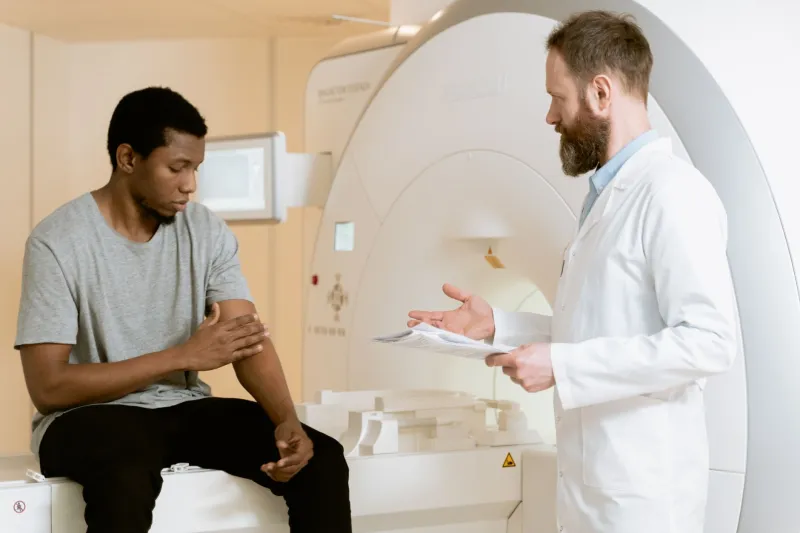
Physicians who work within Newark's hospital systems and outpatient networks frequently acknowledge that structured communication between specialists and primary care providers is inconsistent at best. Referral notes are often brief. Follow-up correspondence may not occur until a formal report is generated, sometimes days or weeks after a specialist appointment. Electronic health record systems, though theoretically designed to facilitate information sharing, frequently operate across incompatible platforms, particularly between independent practices and larger health systems.
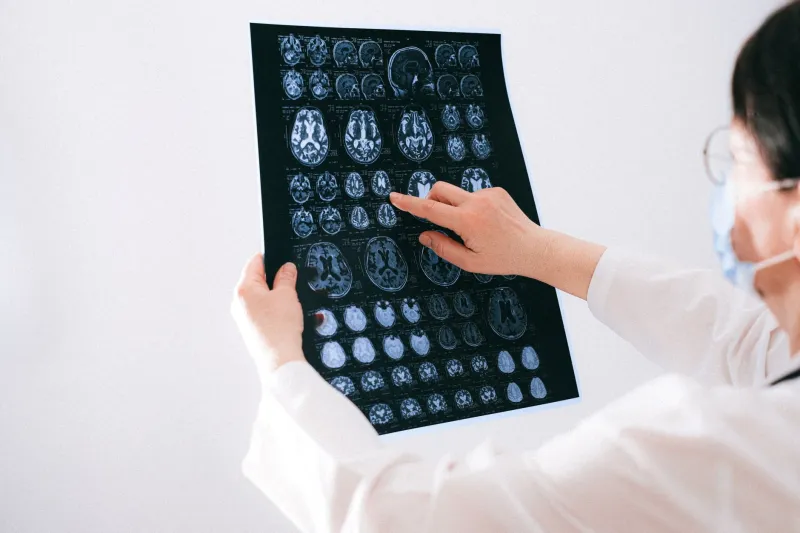
For a CJD patient, this means that the neurologist who orders an MRI may not be aware of the behavioral changes the patient's primary care physician observed three months earlier. The psychiatrist managing the patient's anxiety may not know that a separate neurology consult flagged abnormal gait. Each piece of the clinical puzzle exists in a different file, held by a different provider, with no mechanism compelling anyone to assemble the whole picture.
Adding to this challenge is the reality that many primary care physicians in New Jersey — even highly competent ones — have limited exposure to prion diseases during their training or clinical careers. CJD affects approximately one in one million people annually in the United States. A busy family medicine physician in Newark may never encounter a confirmed case in an entire career. This unfamiliarity means that even when a referral is made, the urgency that CJD demands is rarely communicated with sufficient clarity.
The Institutional Barriers That Sustain the Gap
Several structural factors perpetuate the communication breakdown. First, time constraints within primary care settings discourage the kind of deep, longitudinal thinking that CJD diagnosis requires. Physicians managing panels of hundreds of patients are not resourced to maintain ongoing dialogue with multiple specialists about a single complex case.
Second, the absence of a standardized CJD referral protocol in the Newark region means that there is no shared checklist, no required documentation, and no institutional expectation that primary care and neurology should communicate proactively about patients presenting with rapidly progressive neurological symptoms. In other medical contexts — oncology, for example — multidisciplinary tumor boards exist precisely to prevent this kind of siloed decision-making. No equivalent mechanism exists for suspected prion disease in most Newark healthcare settings.
Third, insurance and reimbursement structures create disincentives for the kind of extended case conferencing that complex rare diseases demand. A phone call between a primary care physician and a neurologist to discuss a shared patient is rarely a reimbursable activity, meaning it depends entirely on the goodwill and available time of both providers.
What Patients and Families Can Do Right Now
While systemic reform requires institutional will that patients cannot manufacture on their own, there are meaningful steps individuals and families can take to bridge the communication gap in real time.
Designate a care coordinator. Whether it is a family member, a patient advocate, or a trusted friend, someone should take explicit responsibility for tracking every specialist the patient sees, every test ordered, and every finding reported. This person should maintain a running summary document that can be shared at every appointment.
Request direct provider communication. At each specialist visit, explicitly ask the physician to contact your primary care doctor directly — not just to send a report, but to speak with them if the findings are urgent or diagnostically significant. Most physicians will honor this request when it is made clearly.
Bring records to every appointment. Do not assume that providers have received or reviewed prior documentation. Carry printed copies of recent MRI results, lab work, and specialist notes to every visit. This is particularly important when seeing a new neurologist for the first time.
Name CJD explicitly. If you or a family member has been told that a rapidly progressive neurological syndrome has no clear diagnosis, it is appropriate — and important — to ask your physician directly whether prion disease has been considered and ruled out. Raising the possibility does not require medical training; it requires persistence.
Ask for a case conference. If your loved one is being seen by multiple specialists simultaneously, you have the right to request that those providers communicate with one another. Some hospital systems in the Newark area can facilitate this through patient relations departments or care management teams.
A Call for Institutional Accountability
Ultimately, the burden of bridging this gap should not rest solely on patients and families who are already managing an overwhelming medical crisis. The Newark CJD Center has consistently advocated for the development of regional referral protocols that bring primary care physicians and neurological specialists into closer alignment when rapidly progressive neurological symptoms are present.
A diagnosis of CJD cannot wait for a system to find its footing. But until structural reforms take hold, informed patients who understand how to navigate — and when necessary, bypass — the communication failures in their care team will be better positioned to access timely, coordinated evaluation.
Time is the one resource in CJD that cannot be recovered. The Newark CJD Center remains committed to ensuring that neither institutional inertia nor administrative fragmentation is allowed to consume it.